Research for the project “Innovating Chinese Printmaking: Contemporary Praxis”
March 2026
A studio research project exploring contemporary approaches to water-based Chinese woodblock printmaking through material experimentation and West Coast landscape imagery.
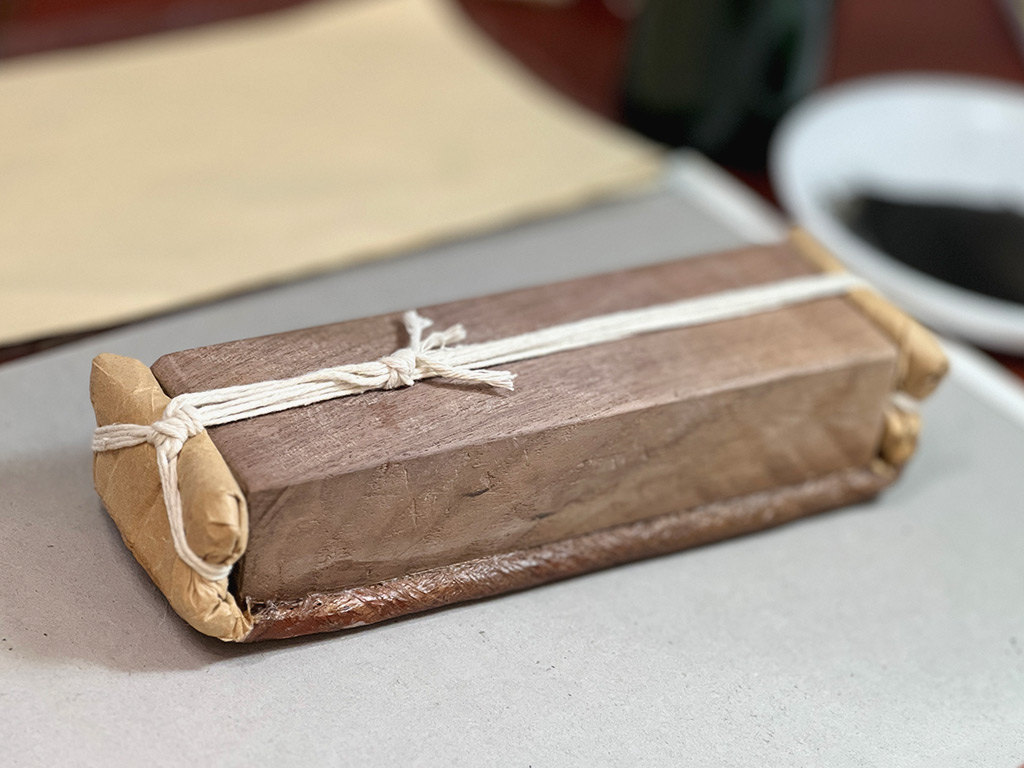
Project Context
I am honoured to have received a Canada Council for the Arts Project Grant (Research and Creation) supporting my project, Innovating Chinese Printmaking: Contemporary Praxis. This support enables me to investigate traditional Chinese water-based woodblock printmaking through studio research and material experimentation.
My interest in this tradition has personal roots. Growing up in Tianjin, I was surrounded by visual cultures connected to historic printmaking centers such as Rongbaozhai (榮寶齋) and Yangliuqing (楊柳青), known for their New Year prints (年畫). While these traditions formed part of my early visual environment, my engagement at the time was largely observational. Through this project, I return to these cultural references through hands-on research and contemporary artistic practice.
Research Focus
Over the past several months, I have been researching how traditional Chinese water-based woodblock printmaking can evolve within a contemporary context in Canada. The project reconstructs key techniques—including Douban (饾版) multi-block colour printing, hand-printing methods, and traditional carving practices—while exploring how new materials and environments influence the process.
Through studio experimentation with Xuan paper, alternative woodblocks, and water-based pigments, the research resulted in fourteen artworks inspired by the coastal landscapes of the Pacific Northwest. The project considers how inherited craft knowledge can adapt to new contexts while remaining grounded in the material principles of the tradition.
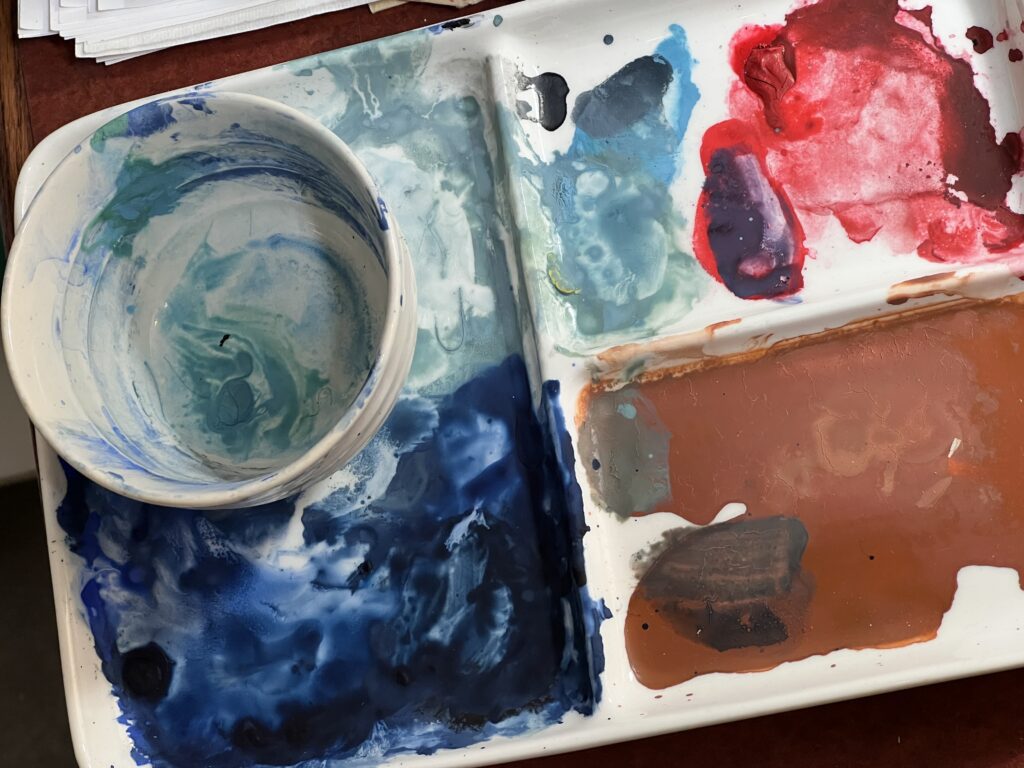
Introduction
Over the past several months, I have been researching how traditional Chinese water-based woodblock printmaking can evolve within a contemporary context in Canada. This project, Innovating Chinese Printmaking: Contemporary Praxis, investigates the reconstruction of key techniques—such as Douban (饾版) multi-block colour printing, hand-printing methods, and traditional carving practices—while exploring how new materials and environments influence the process. Through studio experimentation with Xuan paper, alternative woodblocks, and water-based pigments, the research resulted in fourteen prints inspired by the coastal landscapes of the Pacific Northwest. The project considers how inherited craft knowledge can adapt to new contexts while remaining grounded in the material principles of the tradition.
Relearning the Tradition
Chinese water-based woodblock printmaking is a relief printing system in which images are carved into wooden blocks and printed by hand using water-based pigments. Unlike Western relief printing, which often relies on oil-based inks and mechanical presses, this tradition depends on careful moisture control, layered colour impressions, and the physical sensitivity of hand printing.
In this project, I revisited several traditional tools and methods, including carving with the fist blade (拳刀) and printing with the rectangular rubbing tool known as the baren or Ba Zi (耙子). Each element of the process—from carving to printing—requires attentiveness to pressure, timing, and the absorbency of the paper. Rather than treating the technique as a historical artifact, the goal of this research was to understand how these methods function materially so they can continue to evolve.


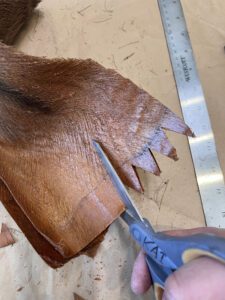
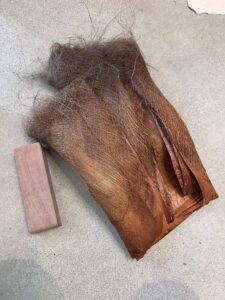
Figure 1. Hand-printing a block using the rectangular rubbing tool known as the baren or Ba Zi (耙子).


Figure 2. Traditional carving tools used in Chinese woodblock printmaking, including the fist blade (拳刀).
Material Experiments
Working outside of China required adapting traditional materials. Several rounds of testing were conducted to determine suitable substitutes and working conditions.
Different types of Xuan paper (宣纸) were tested, including single-layer, double-layer, and bamboo-fibre varieties. Doubled Xuan proved to be the most reliable for multi-layer printing, providing both strength and absorbency while maintaining the subtle tonal transitions characteristic of water-based prints.
Wood selection was another important factor. Traditional pearwood is rarely available in Canada, so I experimented with cherrywood and maple plywood. Cherrywood allowed for precise carving suitable for Douban colour layering, while plywood offered structural stability for larger experimental prints.
Pigments were also explored through combinations of calligraphy ink, Chinese painting colours, watercolour, and gouache. These tests revealed how differences in pigment density and paper absorption affect tonal depth and atmospheric qualities in the final impression.
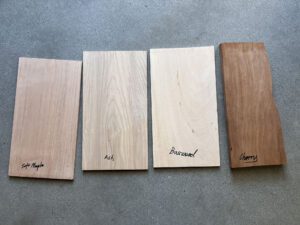


Figure 3. Testing different types of Xuan paper (宣纸) and woodblocks from local stores


Figure 4. Testing the modern method using a maple plywood block
West Coast Landscapes
The imagery of this project is inspired by the coastal environments of the Pacific Northwest. Rock formations, tidal edges, and shifting atmospheric conditions provided a visual framework for exploring ideas of transformation and movement.
These landscapes also resonate conceptually with migration. Having grown up in Tianjin and now living in Vancouver, my practice exists between cultural contexts. The layering process of woodblock printing—where images emerge gradually through repeated impressions—echoes how experiences accumulate across time and place.
Rather than depicting a specific location, the prints attempt to capture sensations of weight, moisture, and shifting light along the coast.


Figure 5. Designing, carving, and printing
Fourteen Prints
The research resulted in fourteen finished works developed through four distinct phases of experimentation. Rather than forming a single stylistic series, the prints document a progression of technical investigation, beginning with traditional reconstruction and gradually expanding into contemporary adaptations and cross-cultural print approaches.


Figure 6. The process of the modern method, monoprint, and collage
Phase 1 — Douban Study
The first phase focused on studying Douban (饾版), the traditional multi-block colour printing method used in Chinese woodblock printmaking. These works were produced using solid cherrywood blocks, which provided a carving surface comparable to traditional pearwood.
A flipping table registration system was constructed to replicate the traditional printing workflow. This system allowed the paper to be lifted and repositioned efficiently while maintaining alignment across multiple colour blocks. The prints from this phase emphasize controlled colour layering, stable registration, and careful moisture management of Xuan paper.


Figure 7. Douban prints
Phase 2 — Modern Multi-Colour Printing
The second phase explored a more contemporary approach to multi-colour woodblock printing. Maple plywood was introduced as a carving material due to its availability and dimensional stability. Unlike traditional hardwood blocks, plywood allowed both sides of a panel to be carved and used within a single composition.
A three-point registration system was used in place of the traditional flipping table. This method provided greater precision for multi-block compositions and allowed larger print formats. The prints in this phase begin to move away from strictly traditional procedures while maintaining the core structure of layered colour impressions.


Figure 8. Modern multi-colour method
Phase 3 — Monoprint and Block Reuse
The third phase introduced elements of Western printmaking methods, particularly monoprint techniques. Instead of assigning each block a single fixed role, previously carved blocks were reused and recombined to create varied impressions.
By altering ink distribution and layering blocks in different sequences, each print developed unique tonal variations. These works move closer to unique edition prints rather than strictly editioned impressions, allowing the printing process to remain responsive and experimental.


Figure 9. Woodblock monoprints
Phase 4 — Collage and Proof Reuse
The final phase extended the research beyond printing alone. Proofs, misregistered prints, and imperfect impressions were preserved and later incorporated into collage compositions on wood panels.
Fragments of earlier prints were cut, rearranged, and layered to form new compositions. This approach allowed the project to reuse materials generated during experimentation while exploring the relationship between printmaking and mixed-media surface construction.
Through this process, the prints began to move further toward cross-media while still retaining visible traces of the woodblock process.


Figure 10. Collage and mixed-media
Structural Observations
Across the four phases, the fourteen works demonstrate how Chinese woodblock printmaking can adapt through different materials, registration systems, and printing approaches. Traditional Douban printing provided the structural foundation, while modern methods and cross-cultural techniques introduced new possibilities for variation and experimentation.
Rather than replacing traditional methods, these phases show how the system can expand while remaining rooted in hand printing and water-based pigment processes.
The Exhibition, Where the Cape Turns


Continuing the Research
This project represents one stage in an ongoing exploration of contemporary Chinese woodblock printmaking. By reconstructing traditional techniques and testing new materials, the research establishes a foundation for future work that expands both scale and conceptual scope.
The fourteen prints produced during this phase demonstrate how historical craft traditions can remain active within contemporary art practice. Through material experimentation, teaching, and public engagement, the project continues to explore how Chinese woodblock printmaking can evolve while preserving its tactile and process-driven character.
This research was supported by the Canada Council for the Arts.
